Individual iPads - Invisible Inclusion
Personal iPads: Invisible Inclusion
At William Ford, every child has their own iPad to use in school. Every day, this puts a world of learning at your child's fingertips, and reflects our Christian vision of every child being successful, whatever their starting point. We believe every child is uniquely made and full of potential, and technology is one of the ways we help unlock that potential, both in the classroom now and in the careers our pupils will go on to have.
Learning across the curriculum
Pupils use their iPad across a wide range of subjects, from Maths and English to French and Geography, turning lessons into hands-on, memorable experiences. Rather than learning being confined to a textbook, children can explore ideas, ask questions and create their own work at exactly the pace and depth that suits them, building confidence and independence along the way.
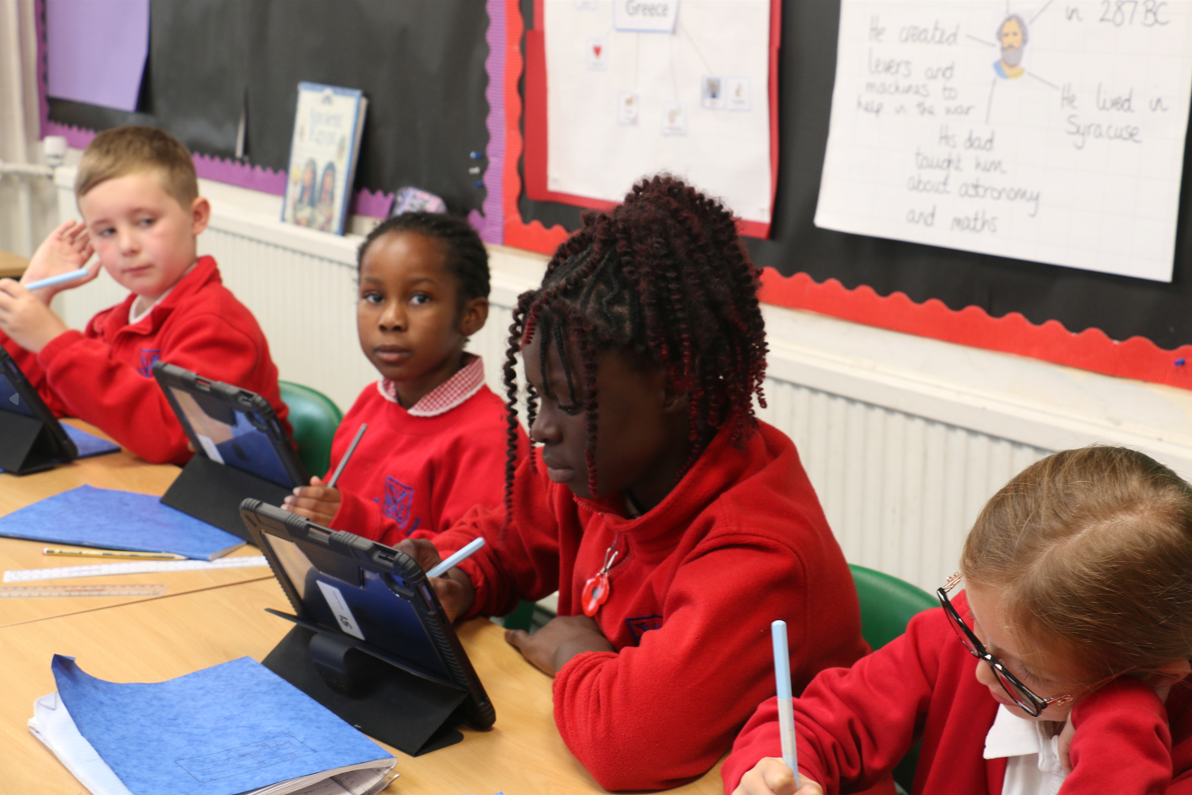
Children are also taught to use a range of creative apps that bring their learning to life, including Movie-Maker, where they produce their own short documentaries and films, and Keynote, where they design and deliver confident presentations. We've already seen wonderful examples of this in action: pupils annotating geography maps to identify key features, building their understanding of multiplication through visual diagrams, and creating a digital log of their work over time that they can look back on and reflect on their progress.
This work sits firmly within our Computing curriculum, but it reaches well beyond it too. Confidently using technology to research, create, edit and present is a skill pupils will carry into almost any future career, whether that's the broadcasters and documentary makers of our radio station and TV studio, the designers and engineers inspired through our Mantle of the Expert curriculum, or the many career speakers who visit our school. We want every child to leave William Ford genuinely comfortable using technology, not because it is fashionable, but because it will matter for whatever they go on to do.
Invisible inclusion
We call this Invisible Inclusion because of how naturally it works. Instead of a child being singled out for extra support, the iPad quietly adapts to what they need. A child with dyslexia might change the colour tint of their screen to make reading more comfortable. A child with English as an additional language might switch the language of a worksheet, or have text translated in front of them. A child who finds writing difficult might use voice-to-text, or have instructions read aloud, so they can show what they know without a barrier getting in the way. To their classmates, it simply looks like everyone using an iPad. To that child, it's the difference between struggling in silence and taking a full and confident part in the lesson.
This is our Christian vision in practice. We believe every child deserves the chance to be successful, and removing the barriers that stand in a child's way, quietly and without fuss, is one of the clearest ways we can live that out.
Showbie
One of the most exciting parts of our iPad offer is Showbie, a simple, secure app that connects teachers and pupils in one place. Instead of waiting days for marked work to come home, teachers can leave voice notes, comments and 'digital post-it' style feedback the moment work is submitted, so your child sees exactly how to improve and can act on it straight away. Pupils can also upload their own work directly, building the habit of reflecting on feedback and taking ownership of their progress, a genuinely effective tool for raising attainment and building confident, independent learners.
What this doesn't replace
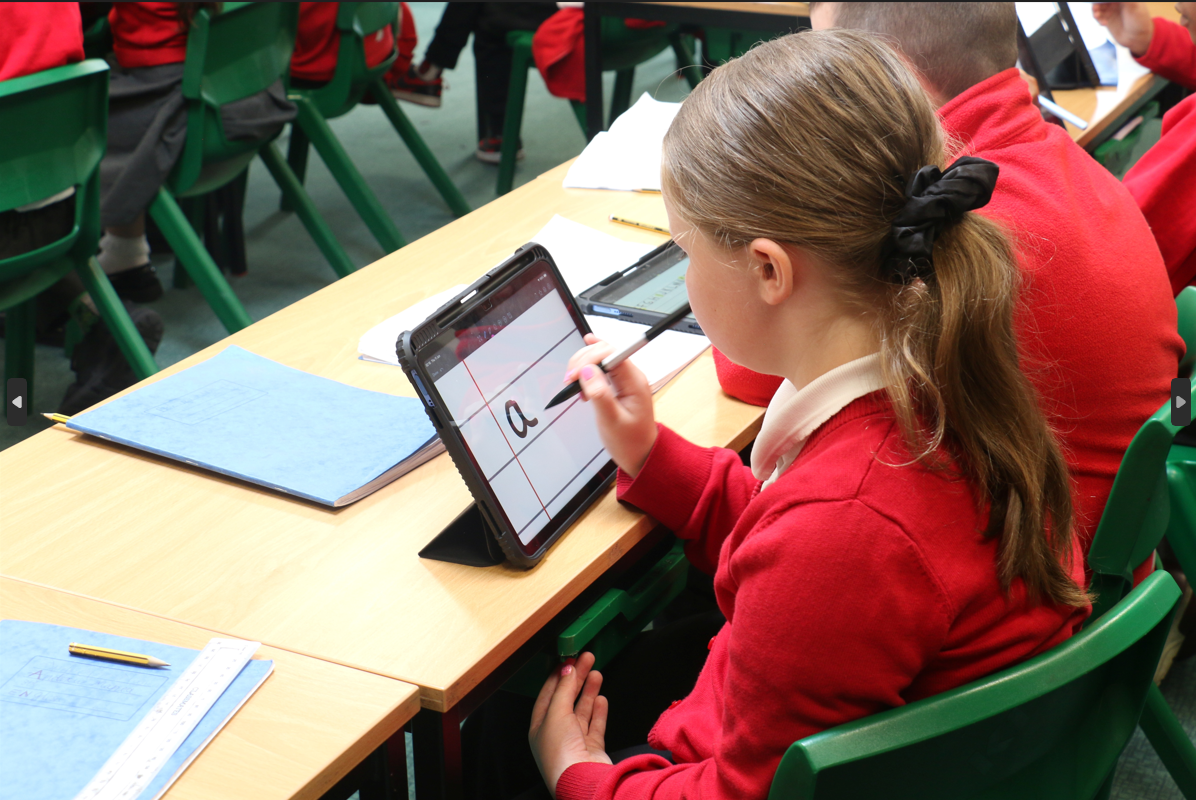
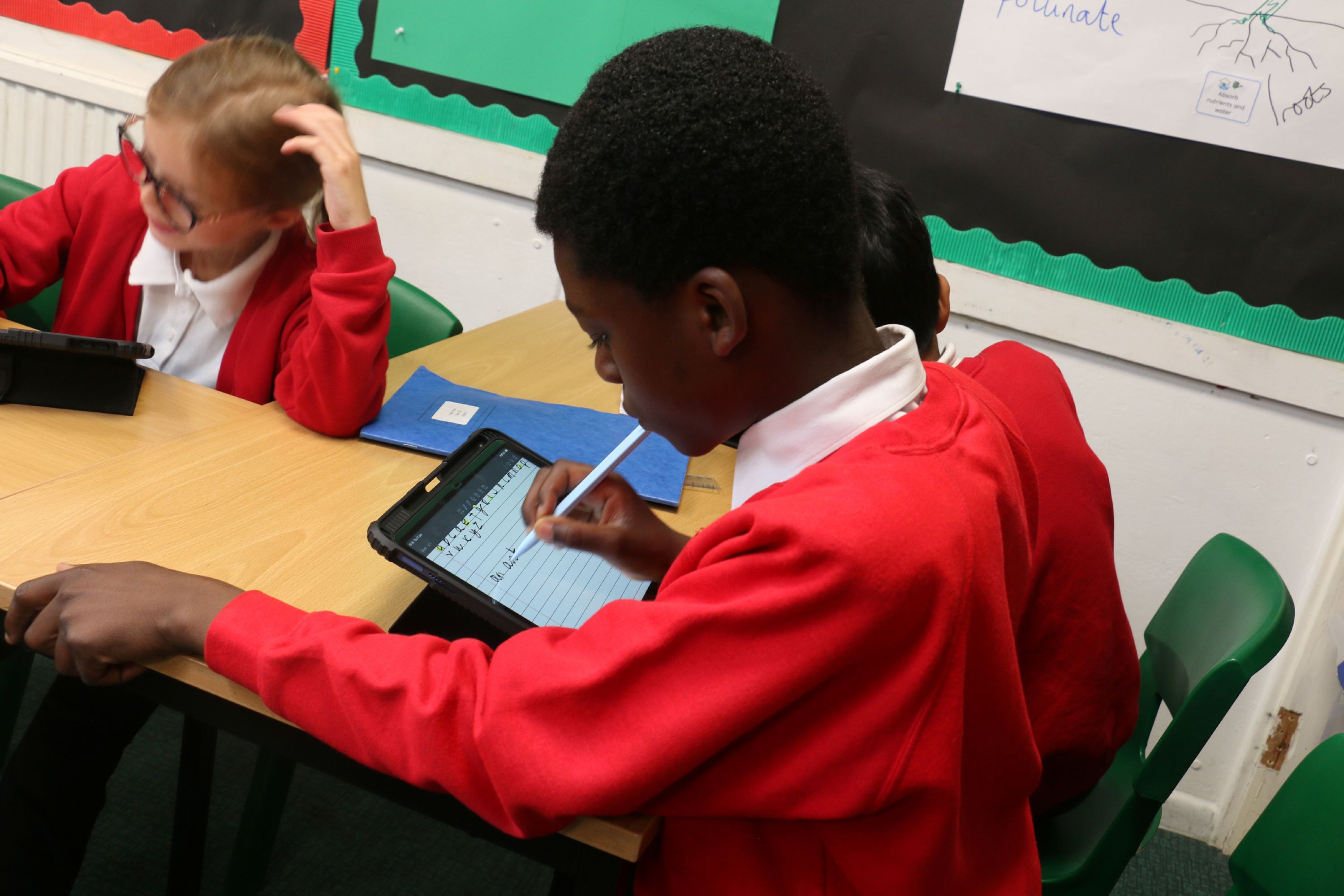
Using iPads doesn't mean stepping away from exercise books, pens or reading real texts. Children still need, and are still taught, the fundamentals of reading, writing and forming their letters by hand, and that remains central to our curriculum. The iPad simply gives us another way to remove barriers to learning, alongside a welcome side benefit of reducing the amount of paper and photocopying used across the school.